

AI Agent – Information Retrieval in Odoo
Odoo's Information Retrieval AI Agent is designed to do exactly that. Rather than relying solely on the AI model's general...

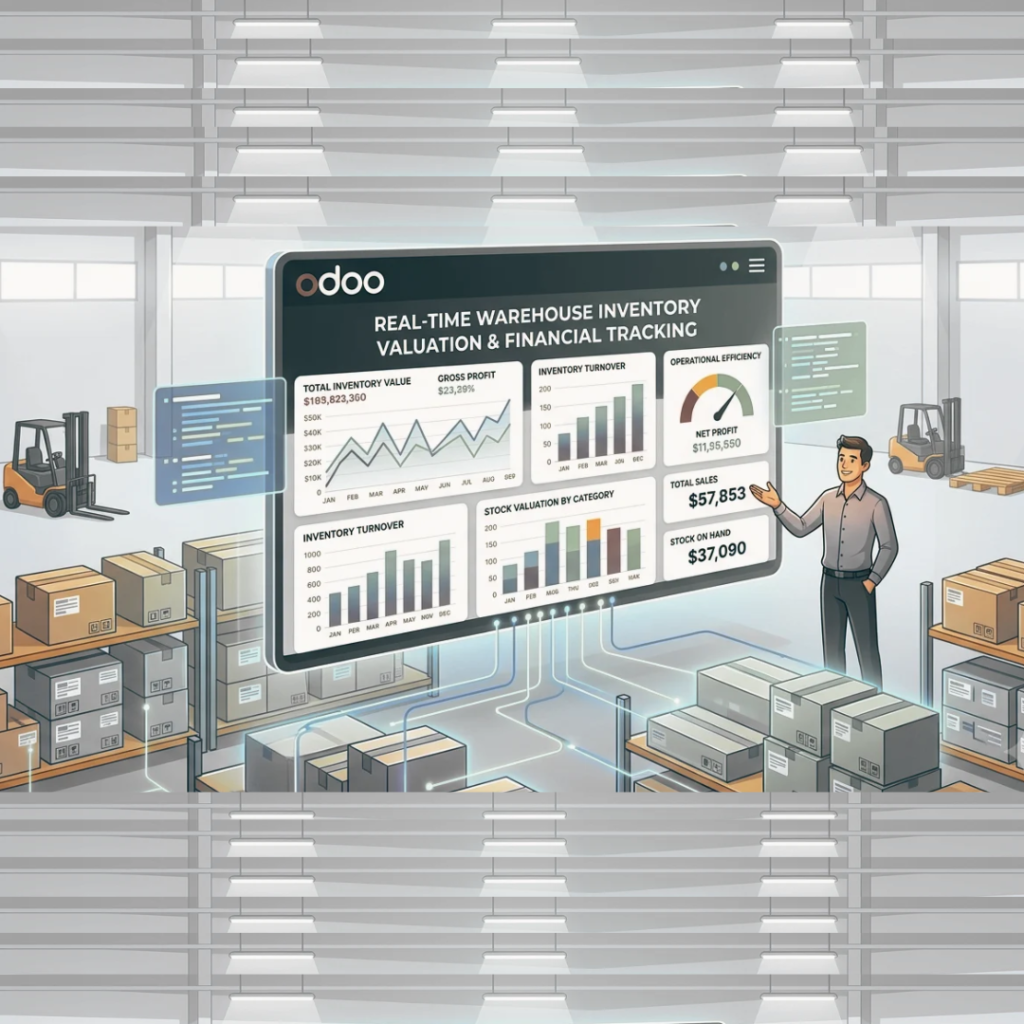
Ask any retail, wholesale, or manufacturing business owner a simple question on a Tuesday afternoon: “𝗪𝗵𝗮𝘁 𝗶𝘀 𝘁𝗵𝗲 𝗲𝘅𝗮𝗰𝘁 𝗳𝗶𝗻𝗮𝗻𝗰𝗶𝗮𝗹 𝘃𝗮𝗹𝘂𝗲 𝗼𝗳 𝘁𝗵𝗲 𝗶𝗻𝘃𝗲𝗻𝘁𝗼𝗿𝘆 𝘀𝗶𝘁𝘁𝗶𝗻𝗴 𝗶𝗻 𝘆𝗼𝘂𝗿 𝘄𝗮𝗿𝗲𝗵𝗼𝘂𝘀𝗲 𝗿𝗶𝗴𝗵𝘁 𝗻𝗼𝘄?”
Most can’t answer without calling their accountant and waiting three days for a spreadsheet reconciliation.
When supplier prices fluctuate weekly, items get damaged on the shop floor, and customer returns pile up, a disconnect forms between your physical warehouse and your financial balance sheet. 𝗜𝗳 𝘆𝗼𝘂𝗿 𝗶𝗻𝘃𝗲𝗻𝘁𝗼𝗿𝘆 𝘃𝗮𝗹𝘂𝗮𝘁𝗶𝗼𝗻 𝗶𝘀 𝗼𝗳𝗳, 𝘆𝗼𝘂𝗿 𝗖𝗼𝘀𝘁 𝗼𝗳 𝗚𝗼𝗼𝗱𝘀 𝗦𝗼𝗹𝗱 (𝗖𝗢𝗚𝗦) 𝗶𝘀 𝘄𝗿𝗼𝗻𝗴. 𝗔𝗻𝗱 𝗶𝗳 𝘆𝗼𝘂𝗿 𝗖𝗢𝗚𝗦 𝗶𝘀 𝘄𝗿𝗼𝗻𝗴, 𝘆𝗼𝘂𝗿 𝗽𝗿𝗼𝗳𝗶𝘁 𝗺𝗮𝗿𝗴𝗶𝗻𝘀 𝗮𝗿𝗲 𝗮𝗻 𝗶𝗹𝗹𝘂𝘀𝗶𝗼𝗻.
With Odoo Inventory configurations, you don’t have to wait for an accounting journal entry to know what your stock is worth.Odoo tracks inventory valuation in real time directly on every stock movement record.
𝗖𝗵𝗼𝗼𝘀𝗶𝗻𝗴 𝘁𝗵𝗲 𝗥𝗶𝗴𝗵𝘁 𝗩𝗮𝗹𝘂𝗮𝘁𝗶𝗼𝗻 𝗘𝗻𝗴𝗶𝗻𝗲:
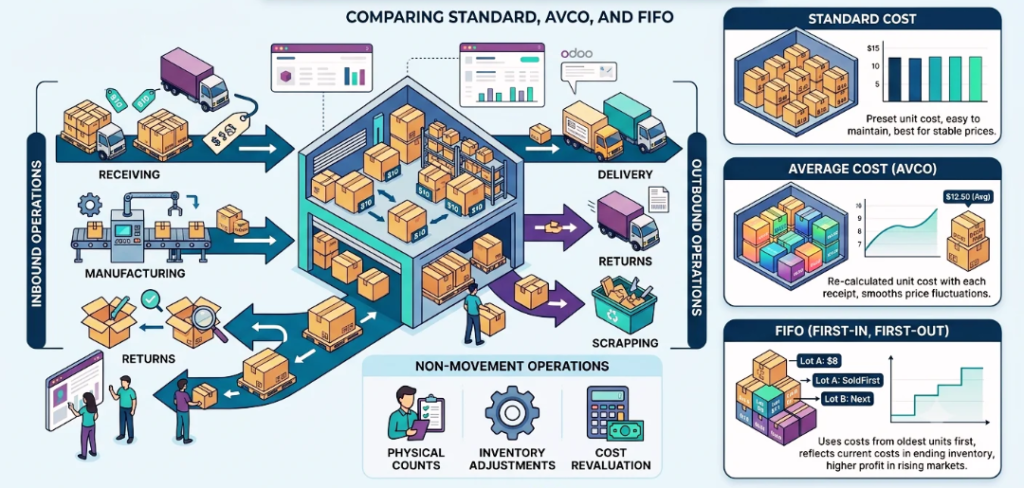
𝗦𝘁𝗮𝗻𝗱𝗮𝗿𝗱 𝘃𝘀. 𝗔𝗩𝗖𝗢 𝘃𝘀. 𝗙𝗜𝗙𝗢
Before looking at warehouse movements, how your ERP calculates value depends on the costing method assigned to your product categories:
For businesses dealing with dynamic supplier pricing, 𝗔𝗩𝗖𝗢 𝗮𝗻𝗱 𝗙𝗜𝗙𝗢 are the gold standards for protecting profit margins.
𝗧𝗵𝗲 𝗚𝗼𝗹𝗱𝗲𝗻 𝗥𝘂𝗹𝗲 𝗼𝗳 𝗜𝗻𝘁𝗲𝗿𝗻𝗮𝗹 𝗧𝗿𝗮𝗻𝘀𝗳𝗲𝗿𝘀
For multi-warehouse: Moving stock internally does not mess up your valuation. Moving a pallet from your receiving dock to a storage shelf—or between two internal zones—leaves your valuation untouched because your company still owns the goods. Valuation only shifts when goods enter or leave your company’s ownership.
𝗧𝗵𝗲 𝗧𝗵𝗿𝗲𝗲 𝗢𝗽𝗲𝗿𝗮𝘁𝗶𝗼𝗻𝘀 𝗧𝗵𝗮𝘁 𝗦𝗵𝗶𝗳𝘁 𝗬𝗼𝘂𝗿 𝗖𝗼𝗺𝗽𝗮𝗻𝘆’𝘀 𝗪𝗲𝗮𝗹𝘁𝗵
Every day, your warehouse team performs dozens of actions. In Odoo, the operations that impact your balance sheet fall into three distinct buckets:
𝗔. 𝗜𝗻𝗯𝗼𝘂𝗻𝗱 𝗢𝗽𝗲𝗿𝗮𝘁𝗶𝗼𝗻𝘀 (𝗠𝗼𝘃𝗶𝗻𝗴 𝗩𝗮𝗹𝘂𝗲 𝗜𝗻)
Whenever stock enters your ecosystem, your asset value increases. This includes:
𝗛𝗼𝘄 𝗶𝘁 𝘄𝗼𝗿𝗸𝘀 𝗶𝗻 𝘁𝗵𝗲 𝗿𝗲𝗮𝗹 𝘄𝗼𝗿𝗹𝗱: Imagine you purchase 10 coffee tables at ₹100 each. The moment your warehouse manager validates the receipt, ₹1,000 of value is injected into your inventory. Next week, your supplier raises the price, and you buy another 10 tables at ₹120 each.
Instead of forcing your team to do manual math, Odoo’s AVCO engine instantly recalculates your inventory: you now have 20 units on hand at an automated average unit cost of ₹110. Your sales team immediately knows the true baseline cost before quoting the next client.
𝗕. 𝗢𝘂𝘁𝗯𝗼𝘂𝗻𝗱 𝗢𝗽𝗲𝗿𝗮𝘁𝗶𝗼𝗻𝘀 (𝗠𝗼𝘃𝗶𝗻𝗴 𝗩𝗮𝗹𝘂𝗲 𝗢𝘂𝘁)
Value leaves your business the exact moment products leave your custody. This includes:
𝗛𝗼𝘄 𝗶𝘁 𝘄𝗼𝗿𝗸𝘀 𝗶𝗻 𝘁𝗵𝗲 𝗿𝗲𝗮𝗹 𝘄𝗼𝗿𝗹𝗱: Continuing the example above, if you ship 5 of those coffee tables to a client under the AVCO method, you don’t need to tell the system what those units cost. Odoo automatically deducts ₹550 (5 units × ₹110 average cost) from your stock valuation. Even better, your remaining 15 units hold steady at their ₹110 unit cost because shipping goods out under AVCO doesn’t distort the average cost of what stays behind. (Note: Under FIFO, outbound deliveries update the displayed product cost field as older batches are depleted first).
𝗖. 𝗡𝗼𝗻-𝗠𝗼𝘃𝗲𝗺𝗲𝗻𝘁 𝗢𝗽𝗲𝗿𝗮𝘁𝗶𝗼𝗻𝘀 (𝗦𝗶𝗹𝗲𝗻𝘁 𝗩𝗮𝗹𝘂𝗲 𝗦𝗵𝗶𝗳𝘁𝘀)
Sometimes, your company’s financial value changes even when a delivery truck never leaves the dock. These “non-movement” adjustments are where most businesses lose money without realizing it:
𝗔𝘂𝗱𝗶𝘁𝗶𝗻𝗴 𝗬𝗼𝘂𝗿 𝗦𝘁𝗼𝗰𝗸 𝗪𝗶𝘁𝗵𝗼𝘂𝘁 𝗪𝗮𝗶𝘁𝗶𝗻𝗴 𝗼𝗻 𝗔𝗰𝗰𝗼𝘂𝗻𝘁𝗶𝗻𝗴
As a business owner, you shouldn’t have to dig through complex ledgers to spot leaks in your warehouse. Odoo provides two dedicated executive views inside the Inventory app:
Configure your costing methods wrong, and your inventory reports become a liability. Configure them properly, and your warehouse becomes a self-auditing financial engine.
Whether you operate a multi-branch retail chain, a high-volume distribution network, or a custom manufacturing unit, getting your 𝗔𝗩𝗖𝗢/𝗙𝗜𝗙𝗢 𝗿𝘂𝗹𝗲𝘀, 𝘀𝘁𝗼𝗰𝗸 𝗮𝘂𝗱𝗶𝘁 𝘄𝗼𝗿𝗸𝗳𝗹𝗼𝘄𝘀, 𝗮𝗻𝗱 𝘃𝗮𝗹𝘂𝗮𝘁𝗶𝗼𝗻 𝗽𝗲𝗿𝗺𝗶𝘀𝘀𝗶𝗼𝗻𝘀 right from day one is critical.
Odoo's Information Retrieval AI Agent is designed to do exactly that. Rather than relying solely on the AI model's general...
Landed cost refers to the total cost of acquiring a product from a vendor and getting it delivered to its...
One of the biggest challenges in achieving sustainable recurring revenue is customer churn—when customers discontinue their subscriptions or stop doing...
Let’s bring your vision to life! Get in touch with us today.
+91 871 483 1222