

AI Agent – Information Retrieval in Odoo
Odoo's Information Retrieval AI Agent is designed to do exactly that. Rather than relying solely on the AI model's general...

Every growing business reaches a point where manual dispatch planning becomes a bottleneck. As order volumes increase, warehouse operations become more complex, delivery schedules tighten, and fleet utilization starts to decline. What once worked with spreadsheets, phone calls, and manual planning quickly turns into delayed deliveries, loading errors, and rising transportation costs.
Are your delivery vehicles leaving the warehouse half-empty? Are warehouse teams accidentally mixing bulk shipments with local delivery orders? Are dispatchers spending hours calculating vehicle capacity, planning routes, and coordinating deliveries manually?
These are common challenges for businesses managing their own fleet. The good news is that they can be solved with an ERP-powered 𝗗𝗶𝘀𝗽𝗮𝘁𝗰𝗵 𝗠𝗮𝗻𝗮𝗴𝗲𝗺𝗲𝗻𝘁 𝗦𝘆𝘀𝘁𝗲𝗺.
A modern Dispatch Management System automates the entire dispatch lifecycle—from warehouse loading and vehicle allocation to route optimization and delivery tracking. Instead of relying on guesswork, businesses can maximize every vehicle’s capacity, reduce operational costs, and deliver orders faster and more accurately.
𝗘𝗹𝗶𝗺𝗶𝗻𝗮𝘁𝗲 𝗟𝗼𝗮𝗱𝗶𝗻𝗴 𝗗𝗼𝗰𝗸 𝗖𝗵𝗮𝗼𝘀 𝘄𝗶𝘁𝗵 𝗢𝗿𝗴𝗮𝗻𝗶𝘇𝗲𝗱 𝗗𝗶𝘀𝗽𝗮𝘁𝗰𝗵
The loading dock is one of the busiest areas in any warehouse. Without a structured process, warehouse teams can easily load the wrong products onto the wrong vehicle, causing shipment delays, inventory discrepancies, and unnecessary rework.
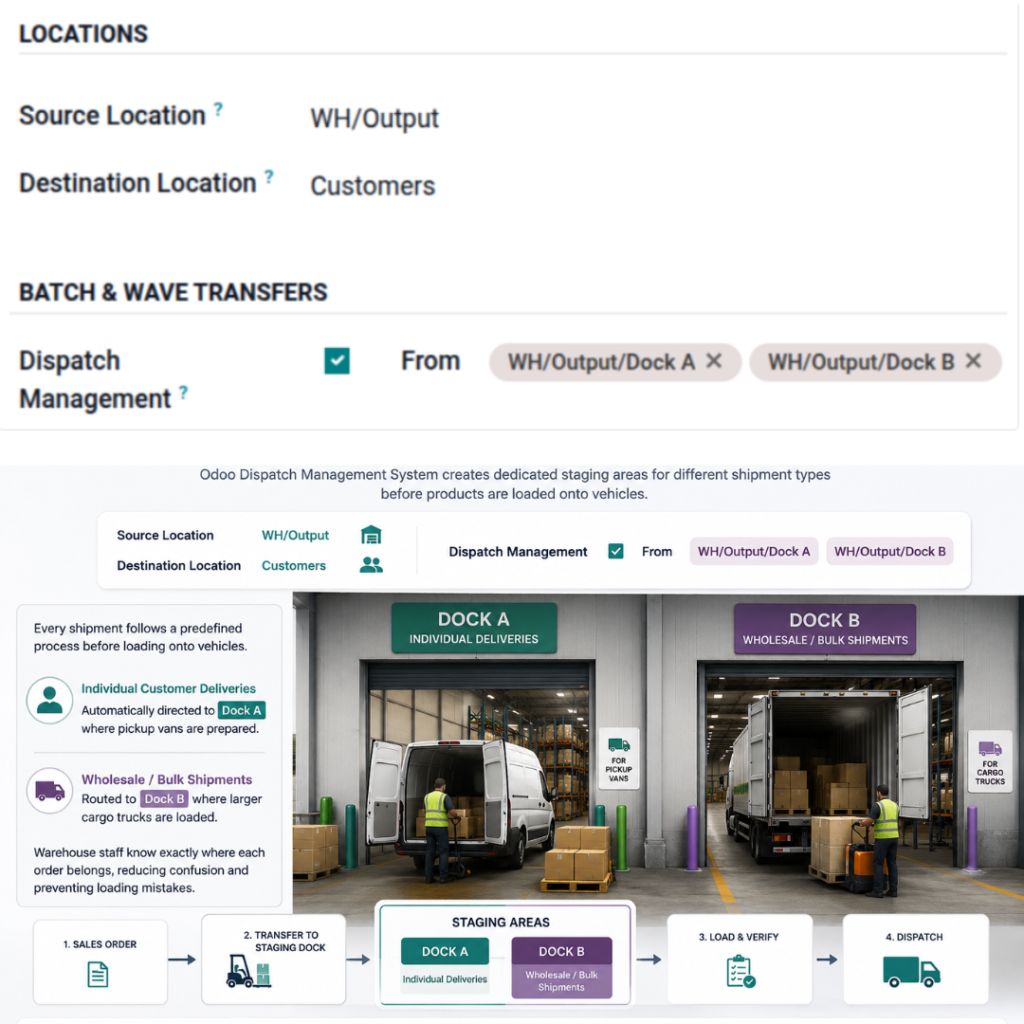
Odoo Dispatch Management System introduces a controlled loading workflow by creating dedicated staging areas for different shipment types before products are loaded onto vehicles.
For example:
Instead of moving products directly from storage to vehicles, every shipment follows a predefined process. Warehouse staff know exactly where each order belongs, reducing confusion and preventing loading mistakes.
The result is:
𝗠𝗮𝘅𝗶𝗺𝗶𝘇𝗲 𝗩𝗲𝗵𝗶𝗰𝗹𝗲 𝗖𝗮𝗽𝗮𝗰𝗶𝘁𝘆 𝗪𝗶𝘁𝗵𝗼𝘂𝘁 𝗢𝘃𝗲𝗿𝗹𝗼𝗮𝗱𝗶𝗻𝗴
Every vehicle that leaves your warehouse with unused cargo space represents lost revenue. At the same time, overloaded trucks increase fuel consumption, create safety risks, damage products, and may violate legal transportation limits.
An ERP-integrated Dispatch Management System eliminates this problem by automatically calculating both the weight and cubic volume of every shipment.
Since Odoo already stores product dimensions and weights, the system can instantly determine:
As dispatchers assign orders to a vehicle, the system continuously validates the load against the selected vehicle’s maximum capacity.
If a shipment exceeds either the permitted weight or available cargo volume, the system immediately alerts the dispatcher before loading begins. Orders can then be reassigned to another vehicle without disrupting warehouse operations.
This intelligent load planning helps businesses:
Every trip becomes more efficient and profitable.
𝗣𝗹𝗮𝗻 𝗦𝗺𝗮𝗿𝘁𝗲𝗿 𝗗𝗲𝗹𝗶𝘃𝗲𝗿𝘆 𝗥𝗼𝘂𝘁𝗲𝘀
An efficiently loaded vehicle still loses money if it follows an inefficient delivery route.
Manual route planning often results in:
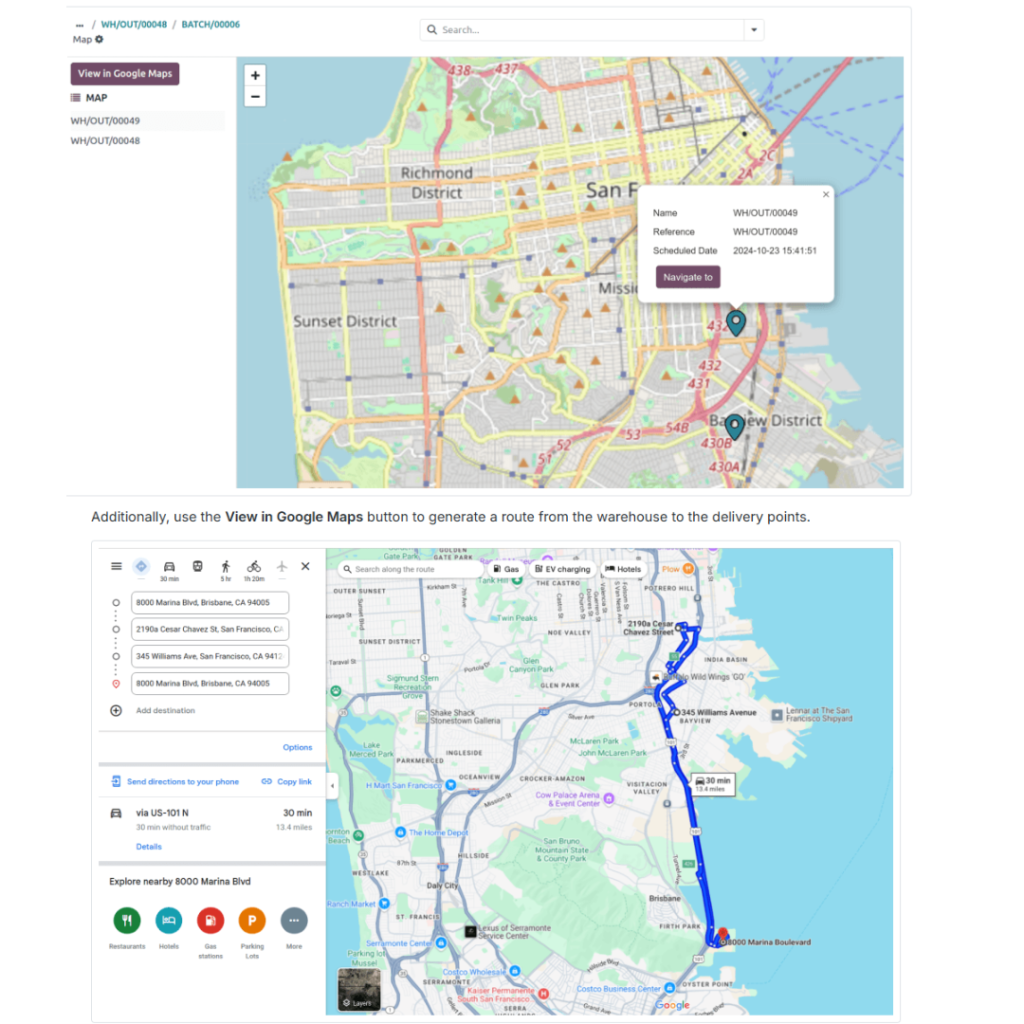
Odoo Dispatch Management Software integrates with mapping platforms such as Mapbox to simplify route planning.
Dispatchers can view every delivery location on an interactive map and generate the most efficient route with just a few clicks. The optimized delivery sequence is then shared directly with the driver’s navigation system.
Benefits include:
Instead of manually planning routes every morning, dispatchers can focus on managing exceptions while the system handles optimization.
𝗚𝗮𝗶𝗻 𝗖𝗼𝗺𝗽𝗹𝗲𝘁𝗲 𝗩𝗶𝘀𝗶𝗯𝗶𝗹𝗶𝘁𝘆 𝗢𝘃𝗲𝗿 𝗬𝗼𝘂𝗿 𝗙𝗹𝗲𝗲𝘁
Managing multiple vehicles without real-time visibility makes it difficult to identify delays, balance workloads, or respond to unexpected changes.
A Dispatch Management System provides centralized visibility into every active delivery.
Operations managers can quickly monitor:
This real-time visibility enables faster decision-making and improves coordination between warehouse teams, dispatchers, and drivers.
𝗜𝗺𝗽𝗿𝗼𝘃𝗲 𝗖𝘂𝘀𝘁𝗼𝗺𝗲𝗿 𝗦𝗮𝘁𝗶𝘀𝗳𝗮𝗰𝘁𝗶𝗼𝗻 𝘄𝗶𝘁𝗵 𝗔𝗰𝗰𝘂𝗿𝗮𝘁𝗲 𝗗𝗲𝗹𝗶𝘃𝗲𝗿𝗶𝗲𝘀
Customers expect deliveries to arrive on time and in perfect condition.
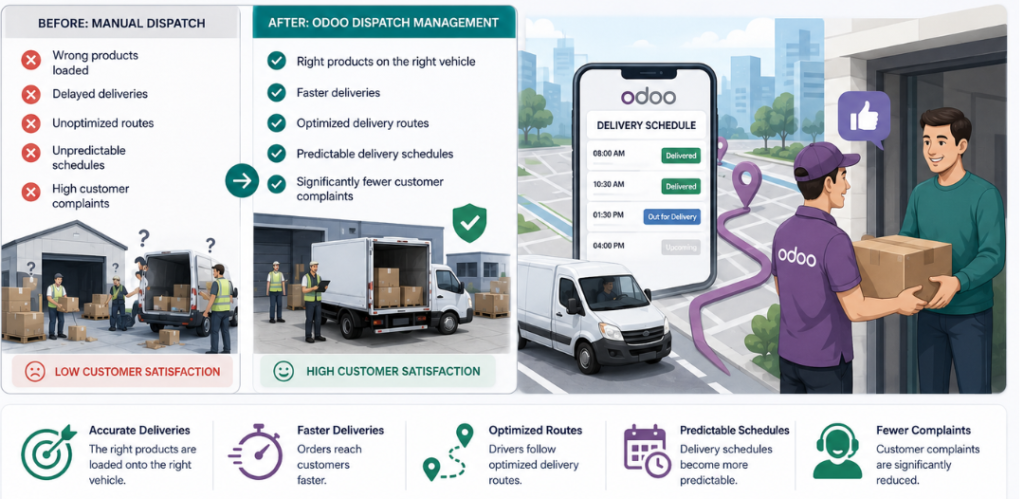
Dispatch errors, incorrect shipments, and delayed deliveries damage customer trust and increase operational costs.
By automating dispatch planning, businesses ensure:
Better dispatch planning ultimately leads to a better customer experience.
𝗜𝘀 𝗜𝘁 𝗧𝗶𝗺𝗲 𝘁𝗼 𝗨𝗽𝗴𝗿𝗮𝗱𝗲 𝗬𝗼𝘂𝗿 𝗗𝗶𝘀𝗽𝗮𝘁𝗰𝗵 𝗣𝗿𝗼𝗰𝗲𝘀𝘀?
If your business experiences any of the following challenges, it may be time to invest in a Dispatch Management System:
Automating dispatch operations not only improves efficiency but also provides the scalability needed to support business growth.
𝗧𝗵𝗲 𝗕𝗼𝘁𝘁𝗼𝗺 𝗟𝗶𝗻𝗲
Dispatch is much more than assigning orders to vehicles. It is the critical link between your warehouse and your customers.
An ERP-powered Dispatch Management System transforms this process by automating warehouse staging, optimizing vehicle capacity, planning efficient delivery routes, and providing complete visibility over fleet operations.
The result is lower transportation costs, fewer loading errors, better vehicle utilization, faster deliveries, and happier customers.
If your business still relies on manual dispatch planning, you’re not just wasting time—you may be wasting warehouse space, vehicle capacity, fuel, and profit.
𝗦𝘁𝗮𝗿𝘁 𝘀𝗵𝗶𝗽𝗽𝗶𝗻𝗴 𝘀𝗺𝗮𝗿𝘁𝗲𝗿 𝘄𝗶𝘁𝗵 𝗮𝗻 𝗶𝗻𝘁𝗲𝗹𝗹𝗶𝗴𝗲𝗻𝘁 𝗗𝗶𝘀𝗽𝗮𝘁𝗰𝗵 𝗠𝗮𝗻𝗮𝗴𝗲𝗺𝗲𝗻𝘁 𝗦𝘆𝘀𝘁𝗲𝗺 𝘁𝗵𝗮𝘁 𝗲𝗻𝘀𝘂𝗿𝗲𝘀 𝗲𝘃𝗲𝗿𝘆 𝘃𝗲𝗵𝗶𝗰𝗹𝗲 𝗹𝗲𝗮𝘃𝗲𝘀 𝗳𝘂𝗹𝗹𝘆 𝗼𝗽𝘁𝗶𝗺𝗶𝘇𝗲𝗱, 𝗲𝘃𝗲𝗿𝘆 𝗿𝗼𝘂𝘁𝗲 𝗶𝘀 𝗲𝗳𝗳𝗶𝗰𝗶𝗲𝗻𝘁, 𝗮𝗻𝗱 𝗲𝘃𝗲𝗿𝘆 𝗱𝗲𝗹𝗶𝘃𝗲𝗿𝘆 𝗮𝗱𝗱𝘀 𝘃𝗮𝗹𝘂𝗲 𝘁𝗼 𝘆𝗼𝘂𝗿 𝗯𝘂𝘀𝗶𝗻𝗲𝘀𝘀.
Odoo's Information Retrieval AI Agent is designed to do exactly that. Rather than relying solely on the AI model's general...
Landed cost refers to the total cost of acquiring a product from a vendor and getting it delivered to its...
why Odoo separates people into three distinct profile types. Depending on their relationship with your business, a single person can...
Let’s bring your vision to life! Get in touch with us today.
+91 871 483 1222